Particle Counter & Dispensing Module
Overview
Features
Application
Software
Specifications
Overview
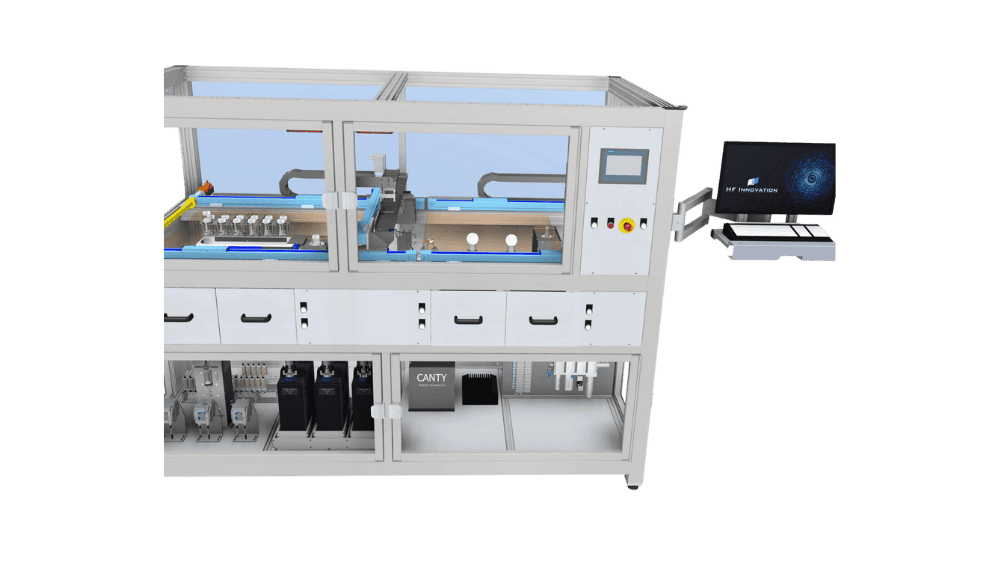
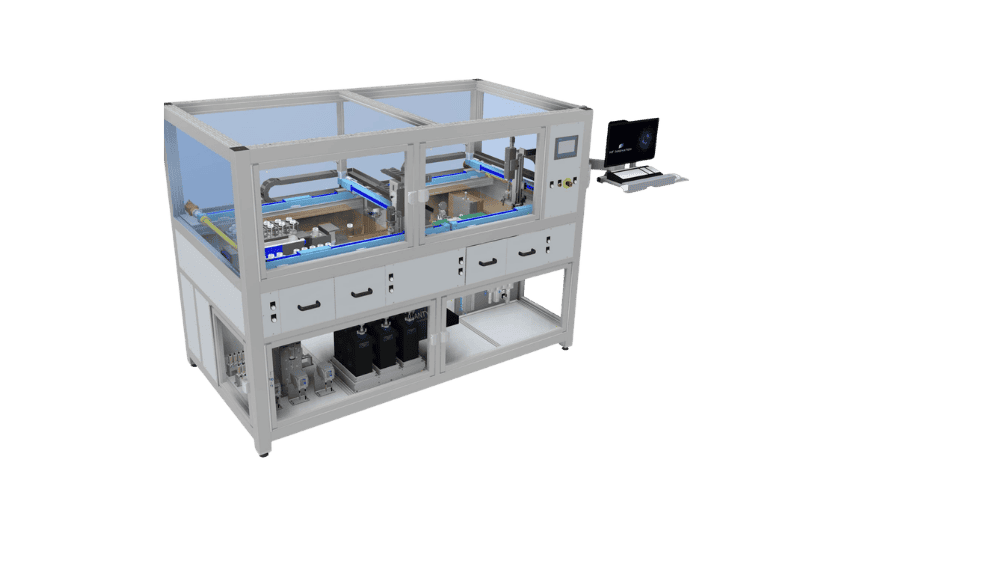
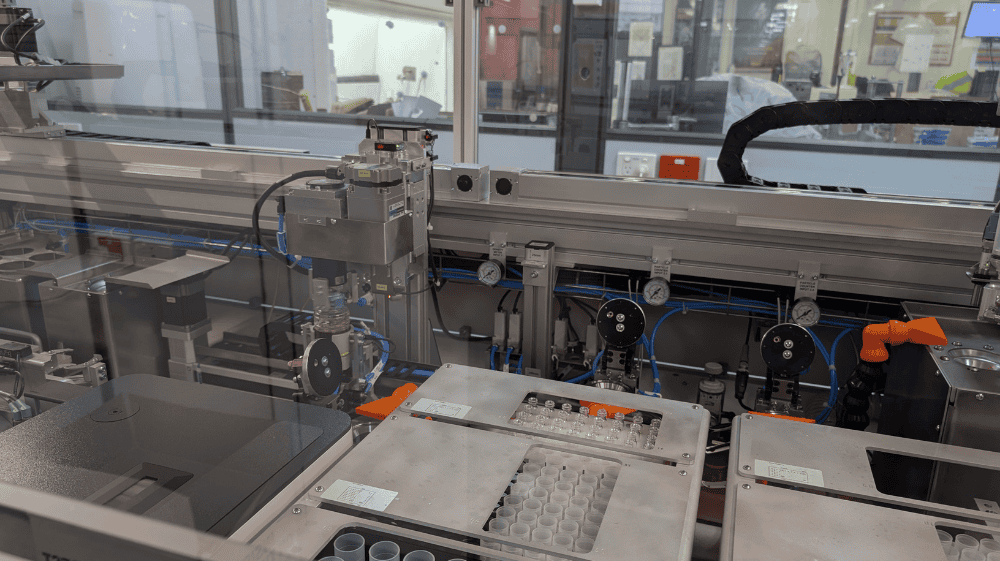
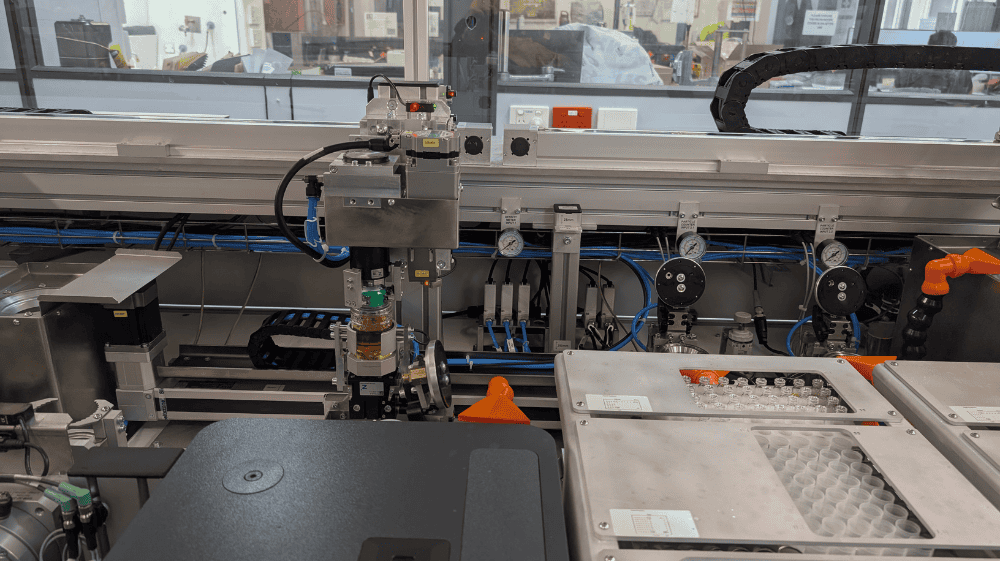
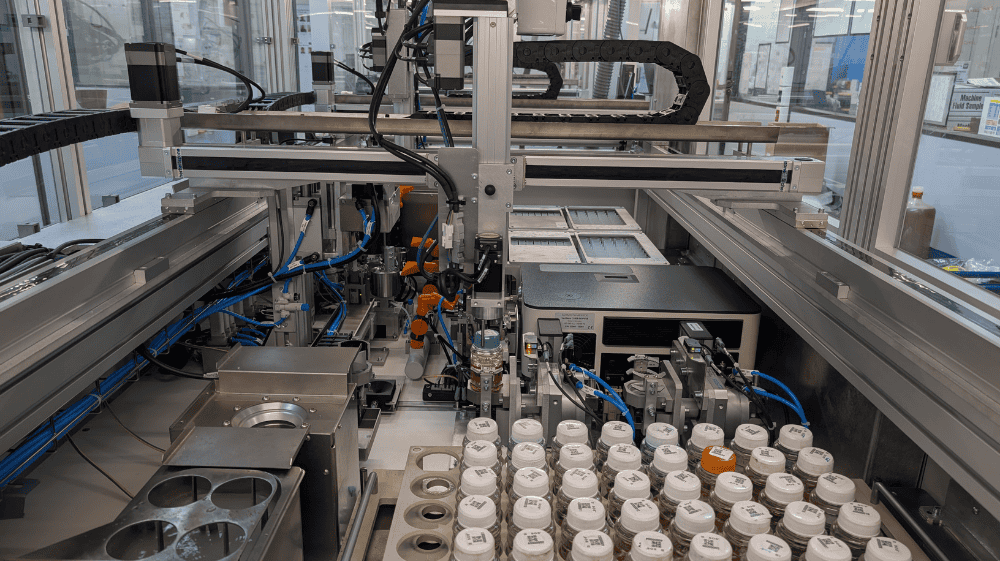
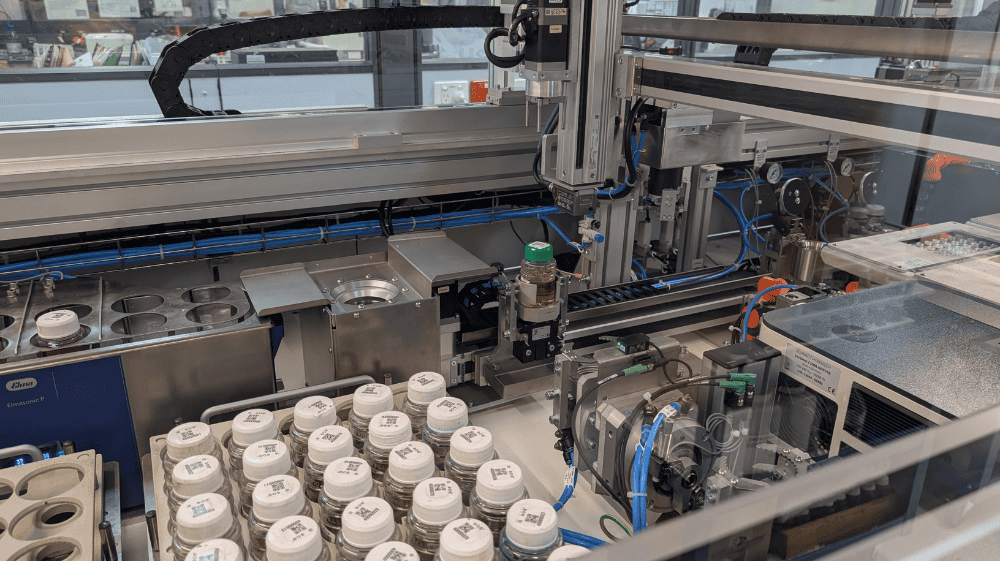
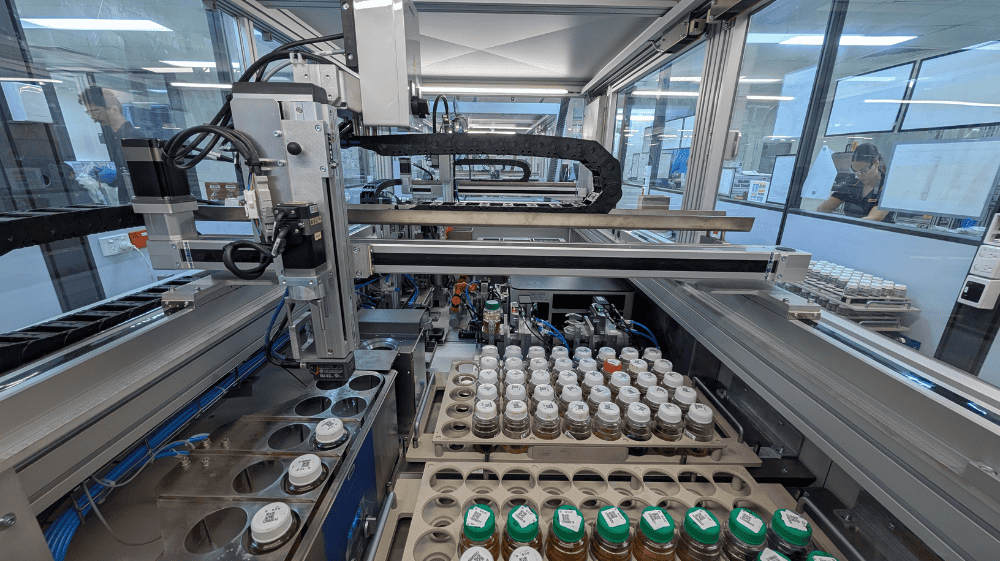
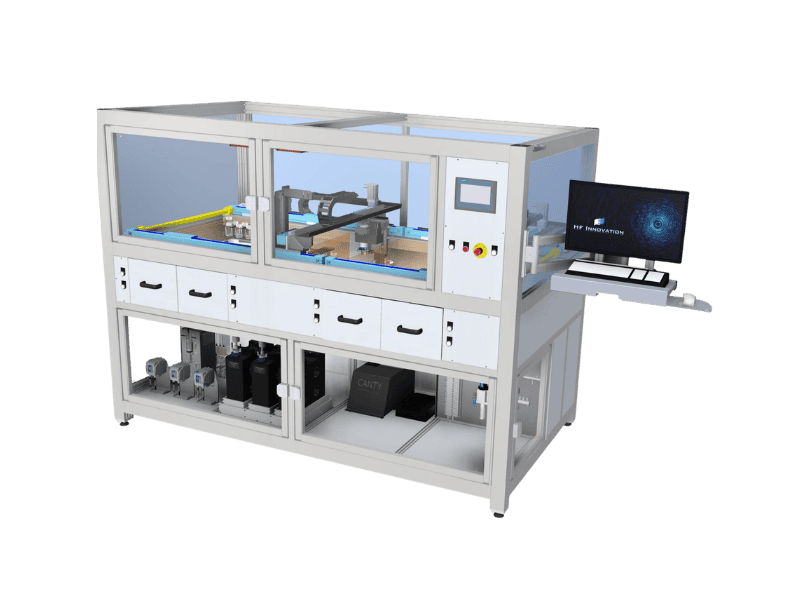
The HF-AODPC is a fully automated laboratory system designed for the precise measurement of oil density and particle contamination in liquid samples. It integrates automated sample handling, density measurement, particle counting, and fluid management into a single enclosed platform, removing the need for separate instruments and eliminating manual sample transfer between analytical stages.
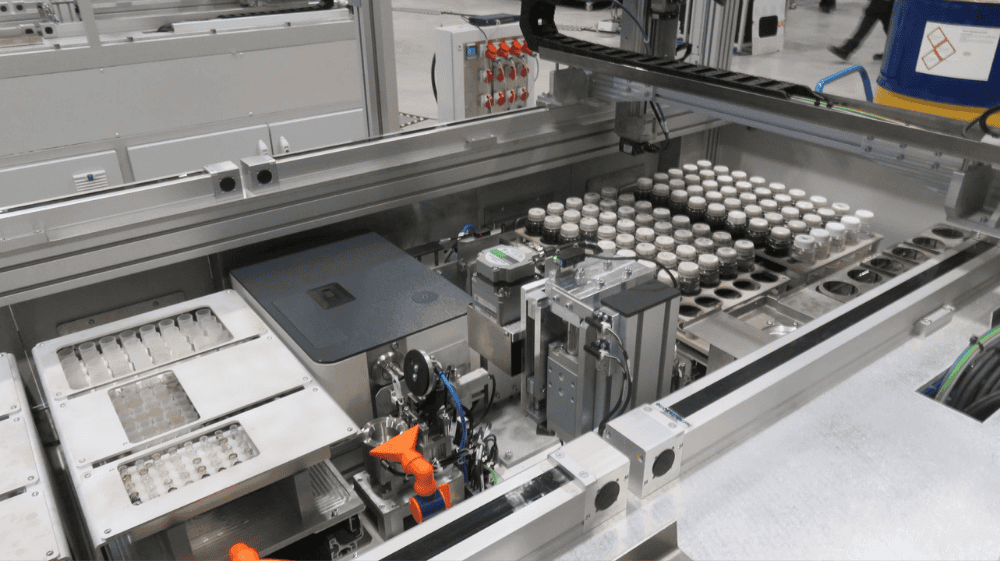
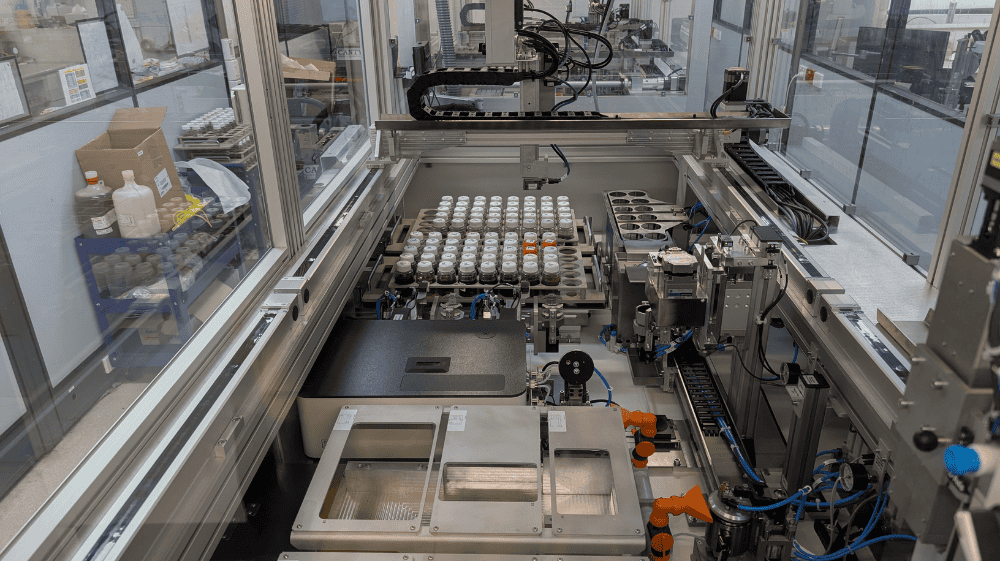
Samples are automatically transported through each stage of the process, including decapping, mixing, dosing, and routing to the appropriate measurement stations. Solvent and cleaning agent handling is managed through monitored buffers and precision syringe pumps, ensuring accurate dosing and thorough cleaning between samples. This controlled approach to fluid management is critical for maintaining measurement integrity and preventing cross-contamination. Waste handling is also integrated into the system, contributing to a cleaner and safer laboratory environment.
The system is built around a PLC-based control architecture paired with an intuitive human-machine interface, giving operators complete visibility and control from a single point. This setup supports reliable unattended operation, making the HF-AODPC well suited to laboratories that require continuous or overnight processing. Running extended analysis sequences without constant supervision increases productivity and reduces the operational burden on laboratory staff.
Safety and reliability are central to the design. The system is fully enclosed with interlocked doors, emergency stop functions, and status indicators that provide clear visual feedback at all times. Safety-rated control logic ensures the system operates within defined parameters, protecting both operators and the integrity of the analytical process from external factors that could affect results.
The internal layout separates key functions into dedicated stations covering ultrasonic cleaning, decapping, mixing, density measurement, and particle counting. This modular structure simplifies routine servicing, troubleshooting, and component replacement, minimising downtime and supporting consistent long-term performance.
The HF-AODPC is suited to any facility involved in oil condition monitoring, quality control, or industrial testing where accuracy, throughput, and operator safety are priorities.
Features
- Fully automated sample handling
Automated transport, decapping, mixing, dosing, cleaning and routing of oil samples through the analysis process. - Integrated density and particle measurement
Dedicated density meter and particle counter stations are integrated into the same system, eliminating manual transfer between instruments. - Automated fluid management
Controlled handling of kerosene, Recosol cleaning solvent, and waste via monitored buffers and syringe pumps with level control. - Sample identification and tracking
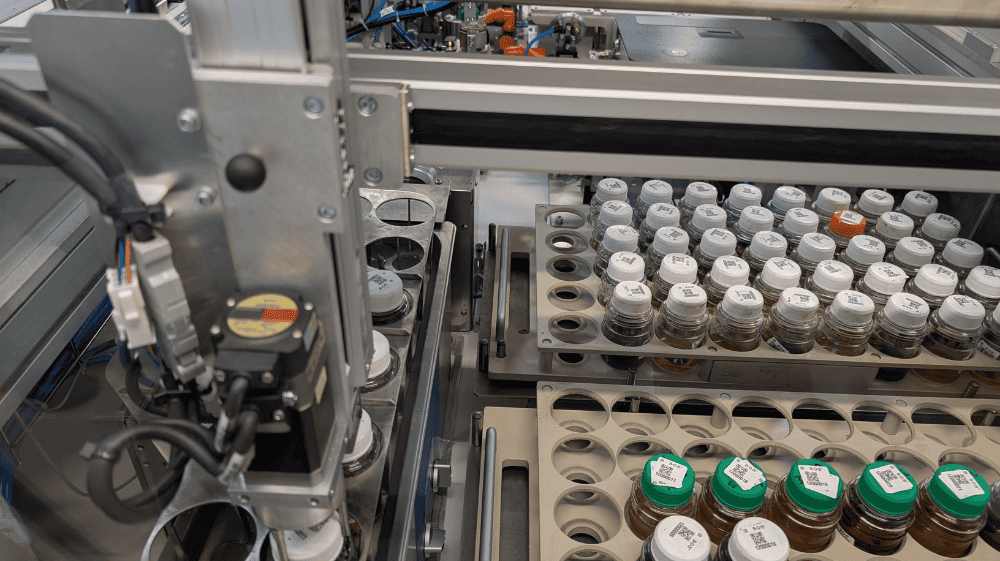
Supports automated sample registration using barcode, QR code or RFID via the integrated Sample Manager system. - Enclosed safety design
Interlocked doors, emergency stop circuits, status lights and safety‑rated control logic support safe operation. - Industrial control architecture
PLC‑based control with Siemens Simatic HMI and dedicated control PC ensures stability and long‑term maintainability. - Modular internal layout
Separate stations for ultrasonic cleaning, decapping, mixing, density measurement and particle counting simplify servicing and fault isolation.
Application
The HF‑AODPC is intended for laboratories and facilities performing routine or high‑volume oil analysis, including:
- Lubricant and hydraulic oil cleanliness monitoring
- Condition monitoring and predictive maintenance programs
- Industrial quality control laboratories
- OEM and component testing laboratories
- Oil analysis supporting heavy equipment, mining, energy and manufacturing sectors
The system is designed for non‑corrosive, non‑explosive oil samples only, in accordance with its intended use.
Software
The system is operated via Sample Manager, a SCADA‑based control and data management platform designed for automated laboratory systems.
Key software capabilities include:
- Centralized control of all machine stations from a single interface
- Automated sample routing and process sequencing
- Real‑time machine status, alarms and diagnostics
- Role‑based user access (operator, maintenance, administrator)
- Sample result logging and historical data storage
- Data export in standard formats (e.g. CSV, XLSX, PDF)
- Interfaces for integration with external control systems or LIMS
The operator interacts with the system through a Siemens Simatic touchscreen HMI and the Sample Manager PC interface.
Specifications
| Dimensions (L × W × H) | 2650 × 1400 × 1950 mm |
| Weight | 1150 kg |
| Supply voltage | 3-phase 400 V AC |
| Frequency | 50 Hz |
| Rated current | 4 A |
| Supply fuse | 16 A |
| Compressed air | Filtered (40 µm), oil- and water-free |
| Operating pressure | 6 bar |
| Air connection | ½ inch |
| Exhaust connection | 40 mm |
| Operating temperature | 0 – 50 °C (non-freezing) |
| Humidity | Max. 75% (non-condensing) |
| Sample Manager software interface | Yes |
| Operator panel (HMI) | Yes |
| PLC web interface (diagnostics) | Yes |
| External control system interface | Yes |