Ball Mixer Mill EQM-402
Overview
Features
Application
Software
Specifications
Overview
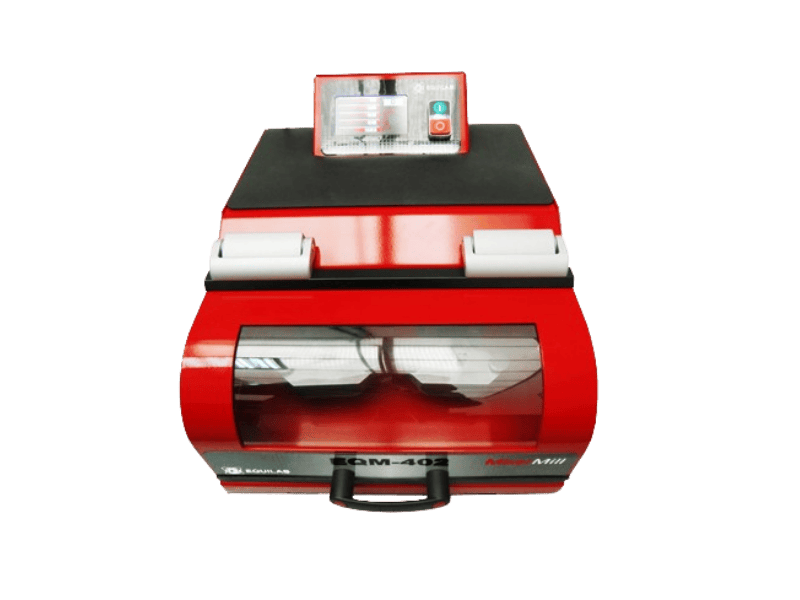
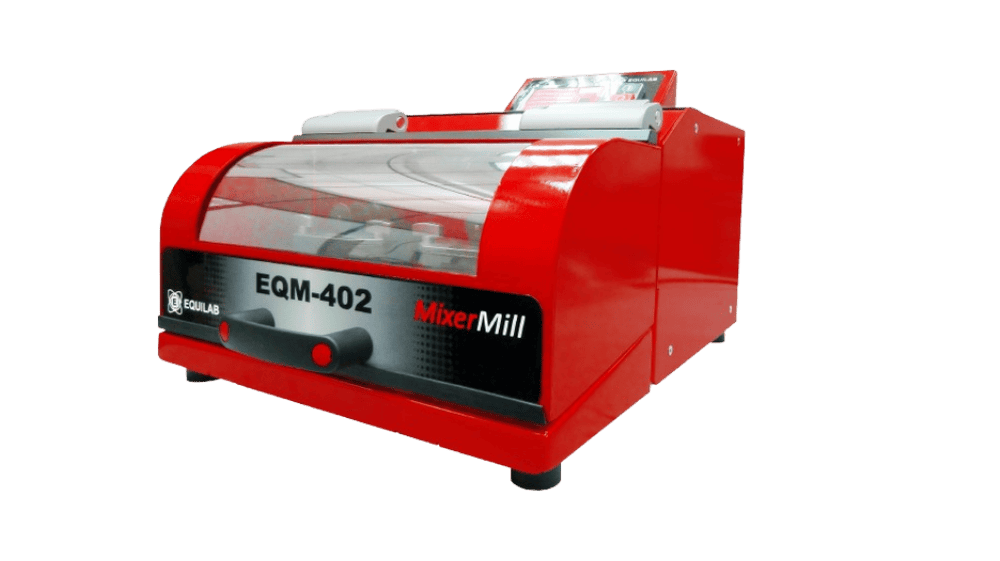
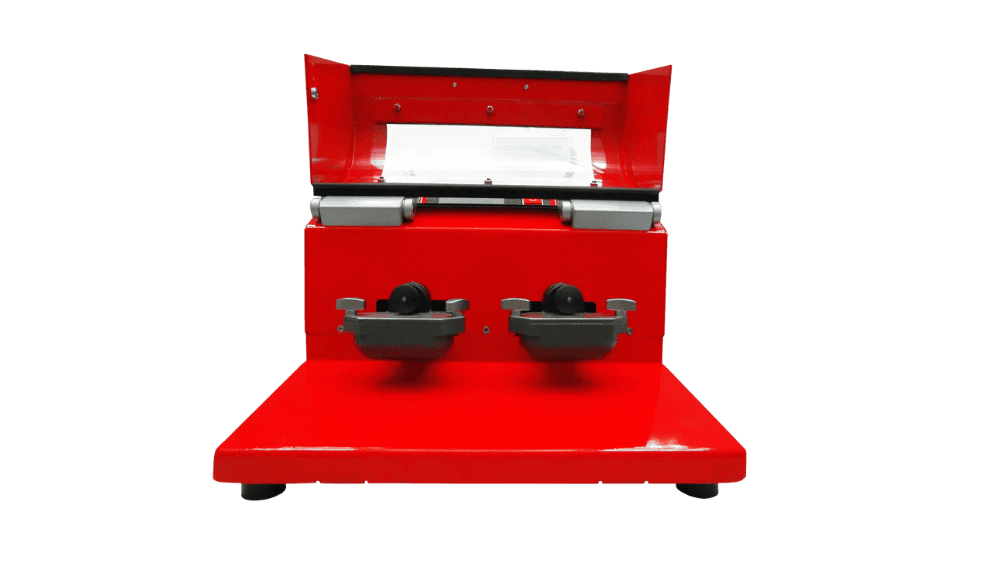
The EQM-402 is a compact desktop ball mixer mill designed for the efficient mixing and milling of small sample quantities in laboratory environments. Built for research laboratories, quality control facilities, and analytical sample preparation environments, it delivers reliable and repeatable particle size reduction in a footprint small enough to fit comfortably within any standard laboratory workspace.
The milling action is driven by a horizontal oscillation movement that propels grinding balls inside the milling jars with considerable force. As the jars oscillate, the grinding balls repeatedly collide with the sample material and the inner walls of the jar, generating a combination of impact energy and friction that breaks down particles and reduces them to fine powder. This continuous oscillating action ensures thorough mixing and consistent particle size reduction across every cycle, giving laboratories the confidence to rely on results that are accurate and reproducible.
The oscillation frequency is fully adjustable, allowing operators to control the intensity of the milling process according to the specific characteristics of each sample. The EQM-402 reaches frequencies of up to 32 cycles per second, covering a wide range of milling power levels suitable for different materials and preparation requirements. Lower frequency settings are appropriate for delicate samples that require careful handling, while higher frequencies deliver the energy needed to grind harder or more resilient materials efficiently. This level of control allows laboratories to tailor the grinding process precisely, achieving the desired final particle size while preserving the integrity of the sample throughout.
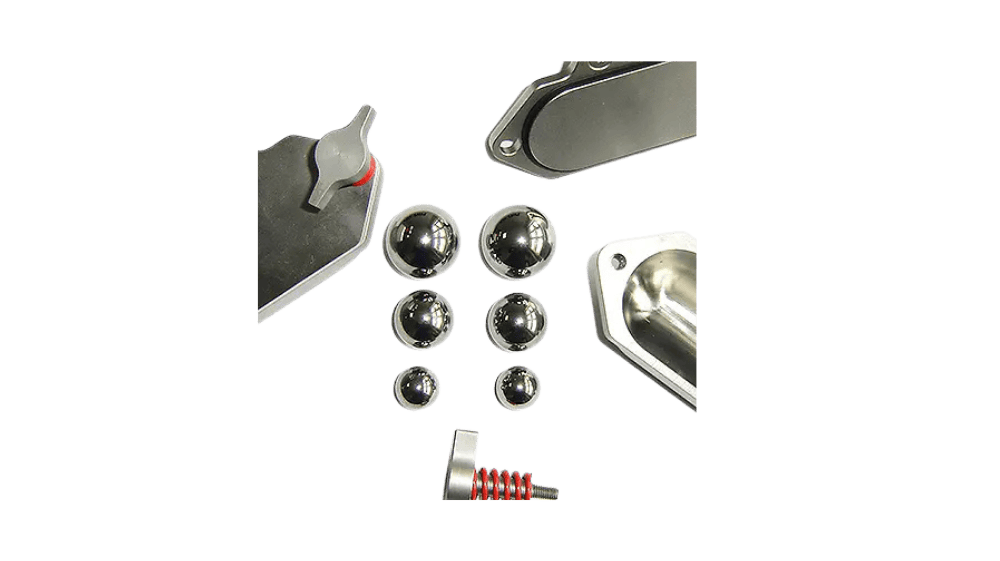
The EQM-402 is equipped with two 50 ml steel grinding jars that operate simultaneously, allowing users to process two samples at the same time or run parallel tests under identical conditions. This dual jar configuration increases laboratory throughput and helps streamline workflows in environments where multiple samples must be prepared quickly and consistently. Grinding intensity can be further refined by adjusting the number, size, and material of the grinding balls, providing an additional layer of flexibility in the milling process.
The mill handles a wide range of materials including soft, semi-hard, hard, fragile, and brittle substances, making it suitable for a broad spectrum of laboratory applications across multiple industries. It supports both dry and wet grinding methods, allowing it to adapt to different analytical requirements and sample preparation protocols. Whether the objective is to homogenise a mixture, reduce particle size for chemical analysis, or prepare samples for further laboratory testing, the EQM-402 delivers dependable and efficient performance across all of these applications.
A key capability of the EQM-402 is its ability to reduce samples to analytical granulometry, achieving final particle sizes of less than 10 micrometres. This level of precision is critical for many laboratory analyses where consistent particle size distribution directly affects the accuracy and reliability of downstream results. By combining strong grinding performance with precise control over milling parameters, the EQM-402 ensures that samples are processed to the exact specifications required for the analytical techniques that follow.
The mill is designed for safe, quiet, and stable operation, making it well suited to routine laboratory use without causing disruption to the surrounding work environment. Its durable construction and high quality components maintain consistent performance over extended periods of daily use while keeping maintenance requirements to a minimum. For laboratories seeking fast, precise, and repeatable sample preparation with a compact and easy to operate instrument, the EQM-402 Ball Mixer Mill is a practical and dependable solution.
Features
-
Compact desktop laboratory mill for mixing and grinding small samples
-
Horizontal oscillation movement for efficient impact and friction milling
-
Adjustable oscillation frequency for controlled grinding intensity
-
Two 50 ml grinding jars operating simultaneously
-
Capable of dry and wet milling
-
Suitable for soft, hard, fragile, and brittle materials
-
Touchscreen interface for simple and intuitive operation
-
Five preset programs for milling speed and time
-
Produces fine particle sizes down to <10 µm
-
Quiet, safe, and repeatable operation
Application
The EQM-402 Ball Mixer Mill is suitable for a wide range of laboratory and industrial applications, including:
-
Metallurgy
-
Environmental laboratories
-
Recycling industry
-
Geology and mineralogy
-
Ceramics
-
Agriculture
-
Food analysis
-
Biological laboratories
Software
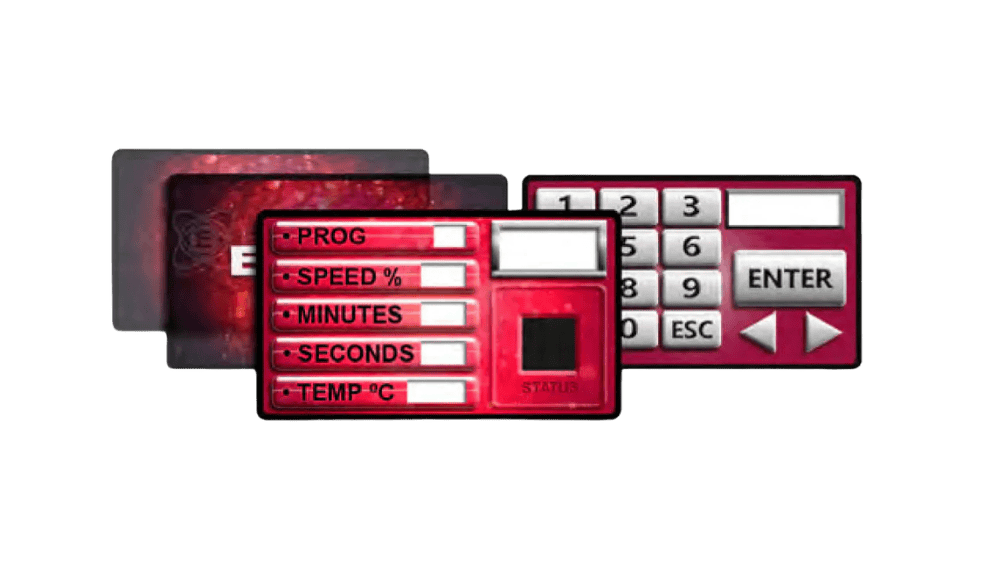
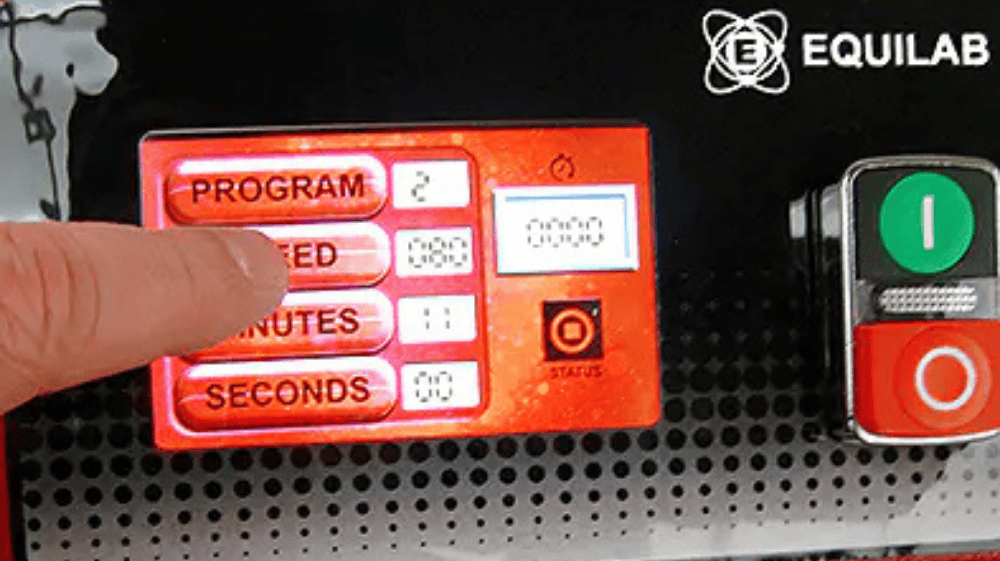
The EQM-402 features a user-friendly touchscreen interface designed to simplify operation and reduce the time required to configure the system between samples. Operators can select from five preset milling programs, configure milling speed and power levels, and set grinding time to anywhere between zero and 59 minutes and 59 seconds. This straightforward interface allows laboratory personnel to establish consistent milling parameters quickly and repeat them accurately across multiple samples, supporting the reliable and reproducible results that routine analytical sample preparation demands. For laboratories processing high volumes of samples on a daily basis, the ability to define and recall milling settings with minimal effort is a practical advantage that contributes to overall workflow efficiency.
Specifications
| Milling principle | Pressure; friction |
| Applications | Metallurgy, environmental laboratories, recycling industry, geology and mineralogy, ceramics, agriculture, food, biology |
| Material | Hard, semi-hard, soft, fragile, brittle |
| Initial sample size | < 5 mm |
| Final sample size | < 10 µm |
| Operation | Configurable – 5 saved programs – speed: 0–100% |
| Milling speed | Programmable up to 1900 rpm |
| Grinding time | Configurable 0 to 59:59 mm:ss |
| Milling jars | Steel |
| Jar size | 50 ml |
| Balls | Steel and Tungsten Carbide (Ø10, Ø15, Ø20, Ø25 mm) |
| Number of jars | 2 |
| Maximum sample quantity | 15 g |
| Grinding method | Dry and wet |
| Working temperature | 10°C – 35°C |
| Power supply | 220 VAC, 50 Hz (single phase) |
| Engine | 95 W |
| Maximum power | 100 W |
| Protection type | IP20 |
| Safety / Certification | CE; UKCA |
| Dimensions | 310 (H) × 365 (W) × 470 (D) mm |
| Weight | 25 kg |