EQP-30 Manual Hydraulic Press
Overview
Features
Application
Software
Specifications
Overview
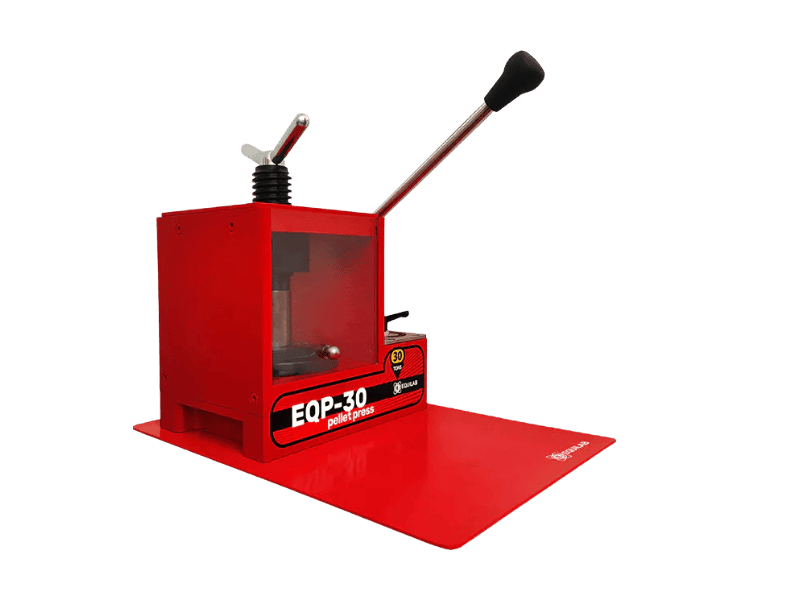
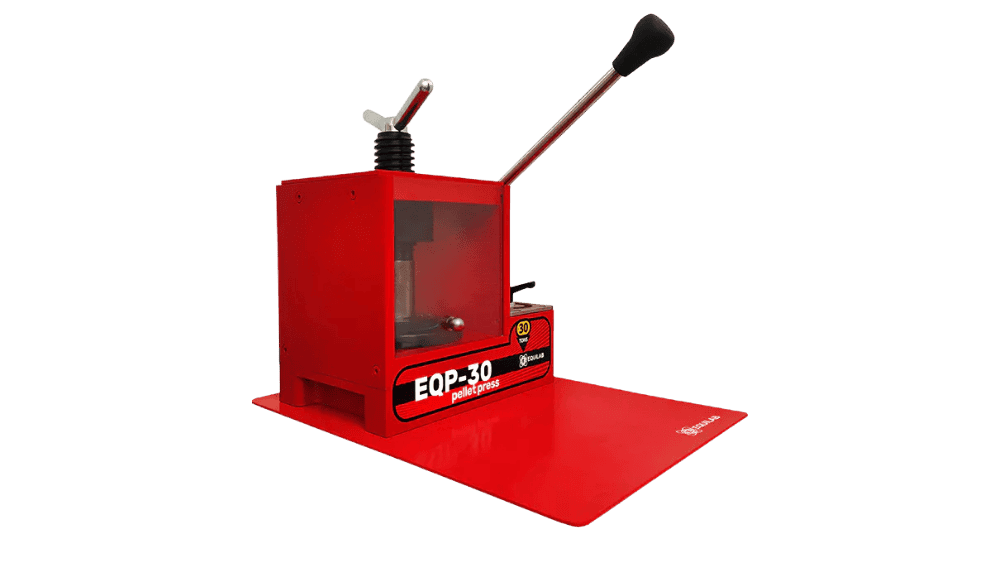
The EQP-30 is a manual hydraulic press designed for the preparation of high-quality pellets used in analytical techniques such as X-ray fluorescence (XRF) and Fourier-transform infrared spectroscopy (FTIR). Pellet quality has a direct bearing on the accuracy of analytical results, and inconsistencies in density, cohesion, or surface finish can introduce variability that undermines the reliability of measurements. The EQP-30 addresses this by applying controlled hydraulic pressure to compact powdered samples into stable, homogeneous pellets with consistent structural integrity across every preparation cycle.
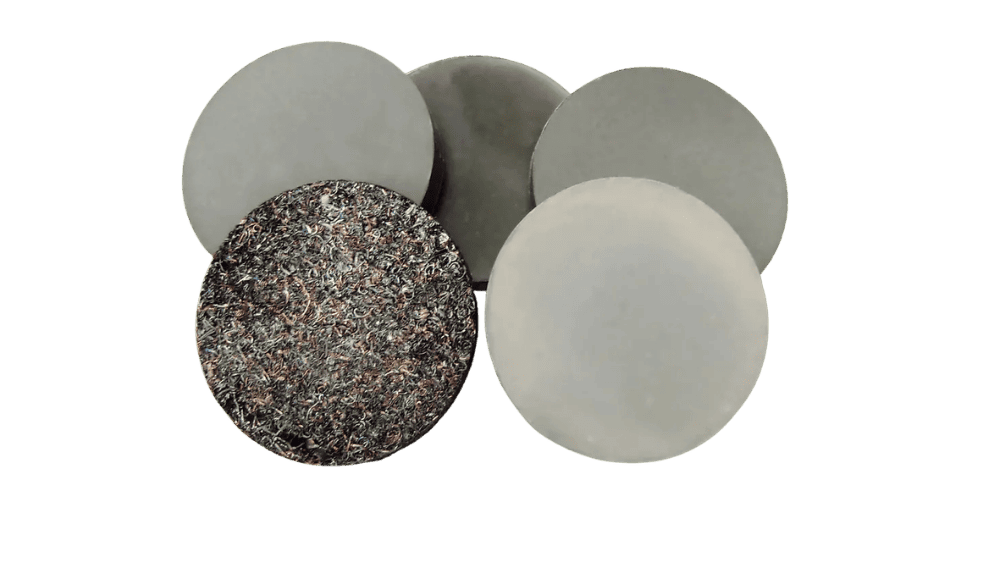
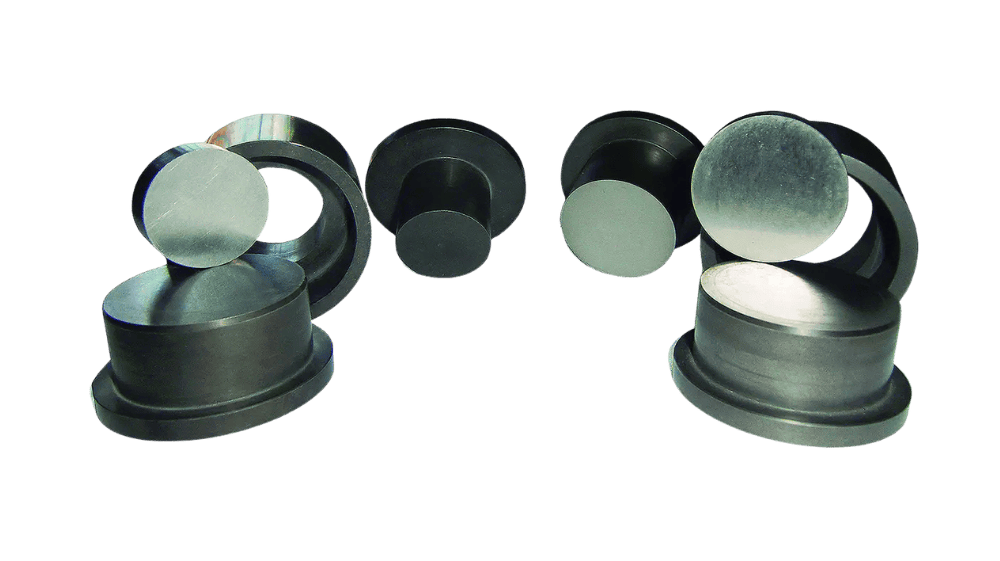
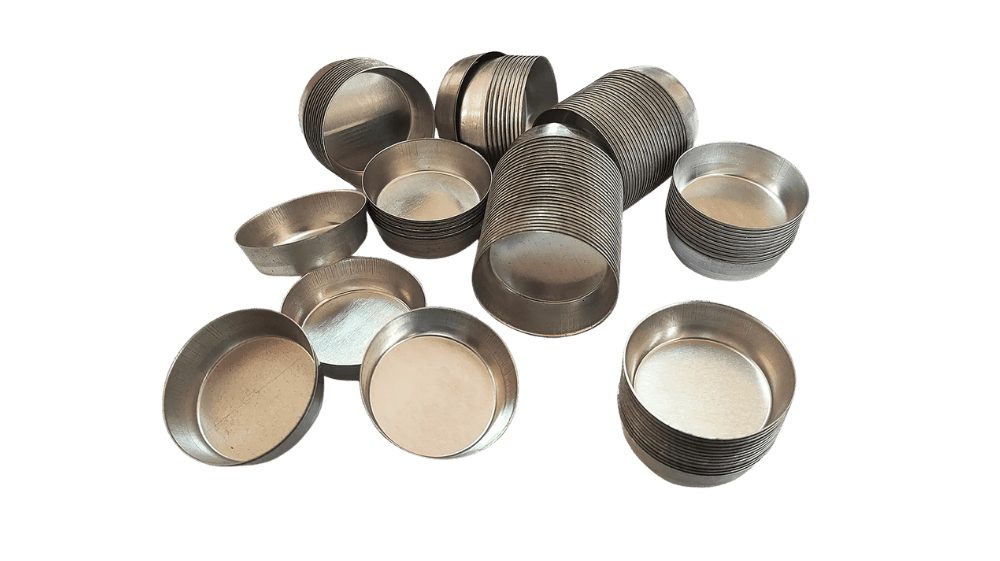
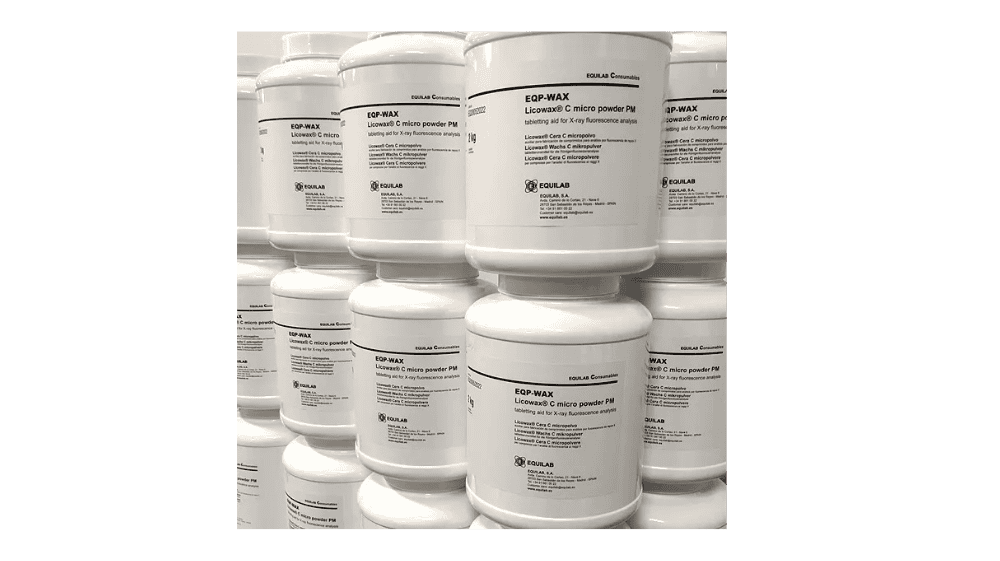
The press is compatible with all EQUILAB pressing tools and accommodates tool diameters ranging from 8 mm to 40 mm, providing the flexibility to prepare pellets of varying sizes to suit different sample types and analytical requirements. It is capable of delivering pressing forces up to 30 tons, ensuring sufficient compaction even when working with difficult or challenging materials. For XRF analysis, the EQP-30 is commonly used alongside binding agents such as wax or boric acid, which improve pellet cohesion and surface quality. It also supports the preparation of potassium bromide pellets for FTIR spectroscopy, a widely used technique in chemical and material characterisation laboratories. This range of compatibility makes the EQP-30 a practical and versatile instrument for laboratories running multiple analytical workflows from a single piece of equipment.
The press is built for intensive daily laboratory use. Its robust mechanical structure is designed to withstand the demands of routine operation while maintaining precise pressure control throughout each pressing cycle. Despite its pressing capacity, the EQP-30 remains straightforward to operate, allowing laboratory personnel to prepare pellets efficiently without the need for complex procedures or lengthy training. An analog manometer calibrated up to 35 tons provides clear, continuous visual feedback of the applied pressure, giving operators the control needed to achieve the desired pressing force accurately and consistently. This level of precision is essential for laboratories where repeatable pellet preparation is critical to the reliability of downstream analysis.
Operator safety is a considered part of the EQP-30 design. Two polycarbonate safety doors protect the operator during the pressing process while maintaining full visibility of the working area. A pressure control valve, pressure release valve, and analog manometer work together to ensure the pressing operation can be carefully monitored and safely managed at all times. These features give laboratory personnel confidence that the system will perform reliably within defined safety parameters during every use.
The EQP-30 is suited to analytical laboratories, research facilities, and industrial quality control environments where precise, repeatable pellet preparation is a routine requirement. Its combination of pressing capacity, operational simplicity, build quality, and safety features makes it a dependable long-term instrument for any laboratory that relies on consistent sample preparation as a foundation for accurate analytical results.
Features
-
Manual hydraulic press for laboratory pellet preparation
-
Produces high-quality, homogeneous pellets
-
Maximum pressing force of 30 tons
-
Compatible with all EQUILAB pressing tools
-
Supports pellet diameters from 8 mm to 40 mm
-
Ideal for XRF and FTIR sample preparation
-
Large pressing area for versatile tool compatibility
-
Analog manometer calibrated up to 35 tons
-
Equipped with pressure control and pressure release valves
-
Two polycarbonate safety doors for operator protection
-
Robust and durable design for long-term laboratory use
-
Simple and reliable manual operation
Application
The EQP-30 is widely used across a broad range of industries and laboratory environments where consistent, high-quality sample preparation is essential. It is a common fixture in cement industry laboratories, metallurgy laboratories, thermal power plants, environmental laboratories, material recovery and recycling facilities, geology and mineralogy laboratories, ceramics industry laboratories, and general research and analytical laboratories. Its versatility across such a wide range of sectors reflects the fundamental role that reliable pellet preparation plays in accurate analytical work, regardless of industry.
In terms of sample preparation applications, the EQP-30 is primarily used for pellet preparation for XRF analysis, typically incorporating binding agents such as wax or boric acid to achieve the cohesion and surface quality required for precise measurement. It is also used for the preparation of potassium bromide pellets for FTIR spectroscopy, a standard technique in chemical and material characterisation workflows. More broadly, the press is used wherever compressed sample pellets are required as part of a laboratory analysis process, making it a versatile and dependable instrument across a wide range of analytical methods and sample types.
Software
The EQP-30 is a fully manual hydraulic press that operates without digital software or electronic controls. The pressing process is managed entirely by the operator through the hydraulic mechanism, with applied pressure monitored in real time using the analog manometer. This direct, hands-on approach gives operators precise control over every stage of the pressing process, allowing them to apply, hold, and adjust pressure according to the specific requirements of each sample type and analytical method.
The absence of electronic control systems is a deliberate design characteristic that contributes to the reliability and longevity of the instrument. Without software dependencies or electronic components that can fail or require updating, the EQP-30 is straightforward to maintain and highly dependable over extended periods of daily use. Laboratories working in environments where electronic systems may be impractical or where simplicity of operation is a priority will find the manual design particularly well suited to their needs.
This approach does not come at the cost of accuracy or repeatability. The analog manometer, calibrated up to 35 tons, provides clear and immediate visual feedback throughout the pressing cycle, giving operators the information they need to consistently achieve the desired pressing force. Combined with the robust hydraulic mechanism, this level of control supports reliable pellet formation across a wide range of sample types, binding agents, and pressing tool sizes.
Specifications
| Working principle | Pressure |
| Applications | Cement industry, metallurgy, thermal plants, environmental laboratories, material recovery industry, recycling industry, geology and mineralogy, ceramics industry |
| Samples | Pellet preparation for XRF (wax, boric acid as binding agent); pellets for IR analysis with KBr |
| Pressing tools | Standard diameters 32 mm and 40 mm; from 8 mm to 35 mm on demand |
| Maximum working pressure | 30 T |
| Safety doors | Yes, 2 polycarbonate doors |
| Pressure control valve | Yes |
| Pressure release valve | Yes |
| Manometer | Analog, calibrated up to 35 T |
| Working temperature | 10°C – 35°C |
| Piston stroke | 16.3 mm |
| Piston diameter (lower pressing area) | 99.5 mm |
| Spindle diameter (upper pressing area) | 41.0 mm |
| Distance between pressing areas (max) | 90 mm |
| Distance between pressing areas (min) | 10 mm |
| Width pressure area | 178 mm |
| Depth pressure area | 185 mm |
| Safety / Certification | CE; UKCA |
| Dimensions | 410 (H) × 315 (W) × 200 (D) mm |
| Weight | 56 kg |