Vial Handling Module
Overview
Features
Application
Software
Specifications
Overview
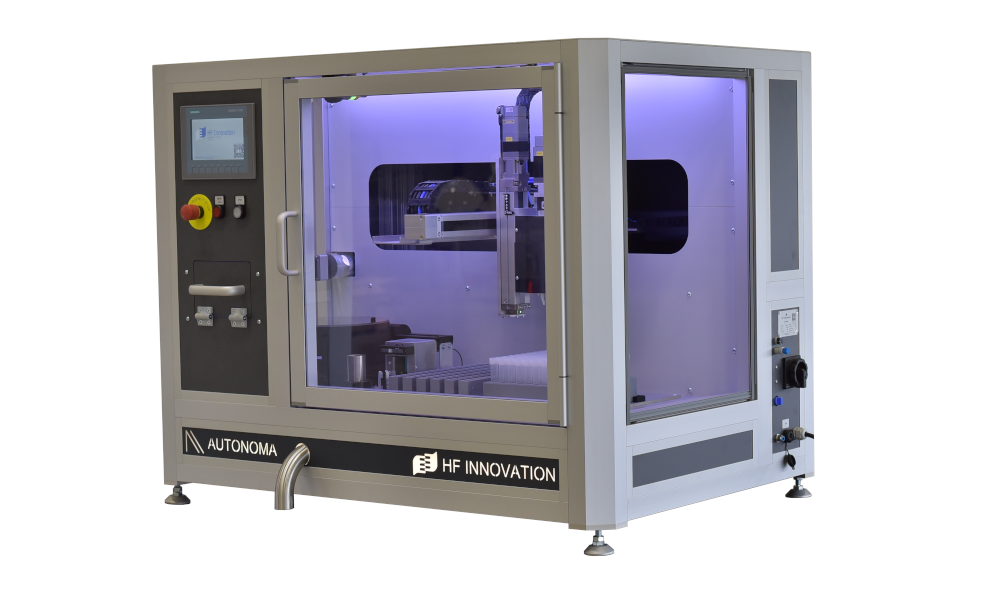
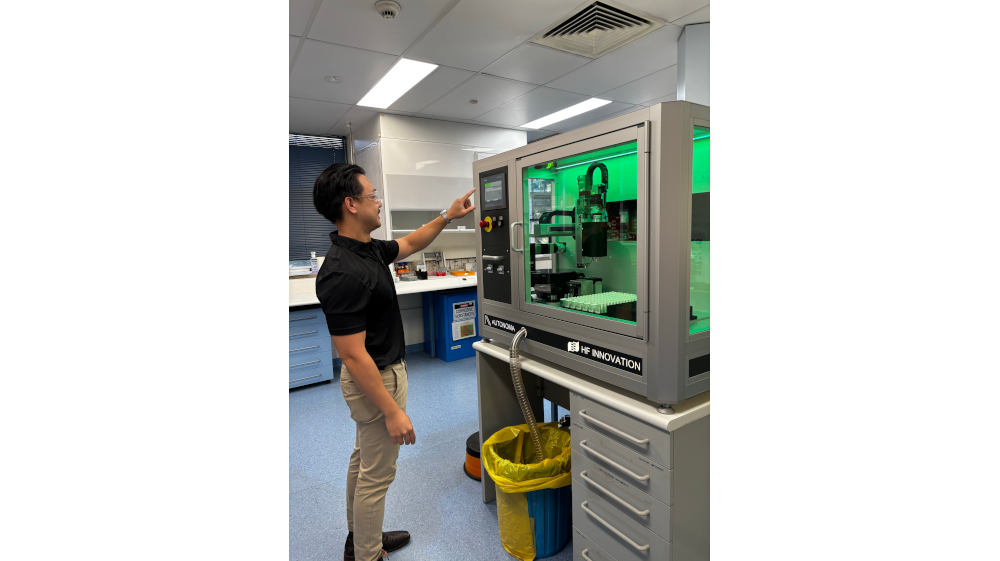
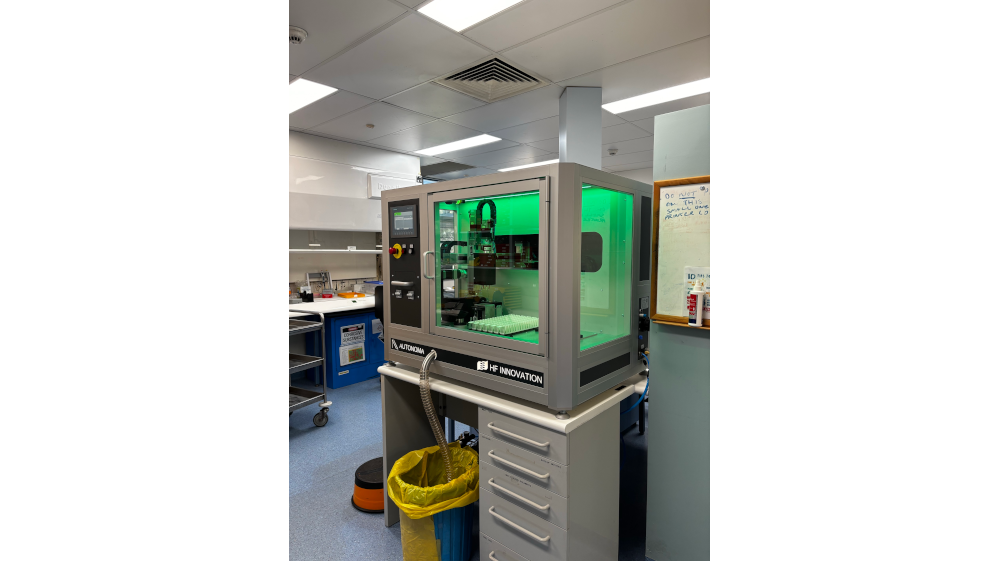
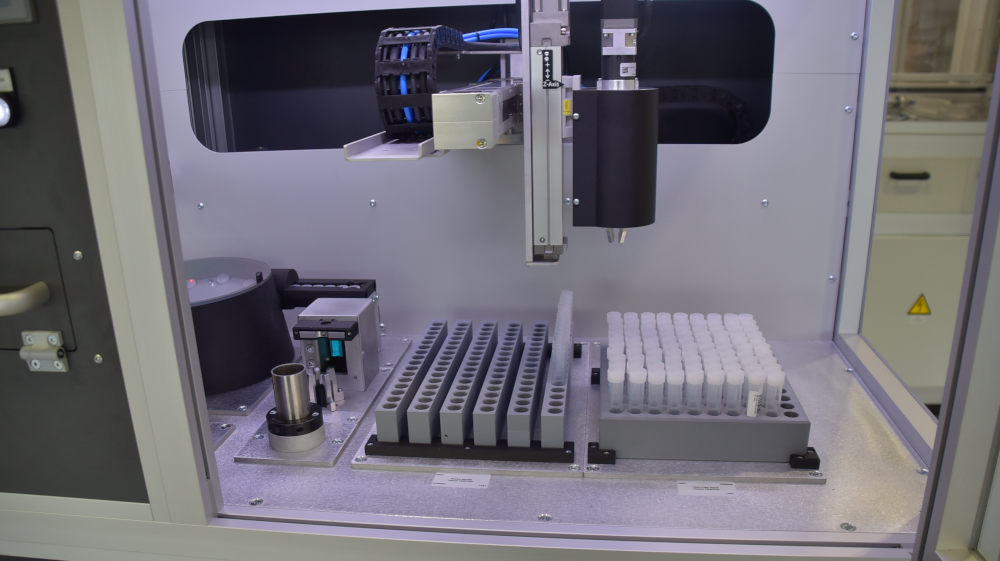
This system is a complete handling solution for vials, test tubes, flasks, and more, supporting sample types such as blood, urine, nasal swabs, and oral fluid, and is engineered to fully automate the tedious, repetitive tasks associated with sample preparation. It fundamentally transforms the laboratory workflow, freeing skilled technicians from manually decapping hundreds of vials and transferring them to instrument racks for analysis. After analysis, the system manages the final stage as well, recapping each vial with a fresh lid and placing it into an archive rack for secure, traceable storage. This end-to-end automation not only speeds up processing but also significantly reduces the risk of repetitive strain injuries among laboratory staff.
The process begins when a lab technician loads trays of capped samples into the system. Each vial is robotically picked and its barcode scanned to compare the sample ID against the worklist received from the client’s Laboratory Information Management System, or LIMS. If an ID doesn’t match or cannot be found, the vial is returned to the rack and flagged for manual intervention, ensuring complete data integrity throughout the process. For valid samples, the automation precisely cuts the security tape seal and removes the cap. This focus on specialized, automated decapping reflects a core principle of AUTONOMA’s design philosophy, echoed in other dedicated systems built to handle specific container types. Once decapped, the cap is disposed of, and the open vial is transferred to the corresponding position in a Tecan instrument rack, ready for analysis.
After analysis, the lab technician re-inputs the Tecan racks into the system. From here, the handling module recaps each vial with a fresh cap drawn from an integrated feeder and sorter, preventing any potential cross-contamination between samples. The recapped vial is then placed into a numbered archive rack, and the sample ID along with its exact storage position is saved to AUTONOMA’s AVANTICA software, which interfaces directly with the client’s LIMS. This creates a complete, searchable digital chain of custody, allowing any individual sample to be easily located and retrieved for re-testing if required.
By automating the entire workflow, this vial handling module saves technicians from monotonous, high-volume manual tasks and minimizes their physical exposure to potentially hazardous samples, creating a safer, more efficient, and more scalable laboratory environment.
Features
- Reduces/eliminates lab technician exposure to:
- Manual handling
- Dangerous substances
- Repetitive actions
- Eliminates risk of sample mix-ups and result errors.
- Excellent precision and accuracy (no variance between operators)
- Frees up operators to perform more complex and valuable tasks.
- Allows unattended processing of samples after hours.
- Safety guarding and interlocks aligning to Australian Standards AS4024 – Safety of Machinery.
- Allows easy integration with AUTONOMA’s other modular automation in the future, without costly modifications or engineering.
Application
This system can be used in any vial handling workflow across a wide range of industries, including pathology, mining, chemical processing, environmental testing, and condition monitoring. Its flexible design allows it to adapt to the specific sample types and handling requirements found in each of these settings, making it a practical fit for laboratories with diverse or evolving workflow needs.
The system’s capabilities can also be expanded through additional modules, allowing it to grow alongside a laboratory’s changing requirements. Available add-ons include an AI camera for sample identification and level detection, pipettes for liquid handling, mixers, heating blocks, and reagent addition capabilities. For laboratories seeking deeper workflow integration, the system also supports direct instrument integration with analytical equipment such as ICP and GC, enabling a more seamless, end-to-end automated process from sample intake through to final analysis.
Software
The system is linked to a PC on the network, connected to the client’s LIMS, allowing sample information to be transferred automatically and ensuring each vial is tracked and verified throughout the workflow. Alternatively, it can be operated as a standalone system through the touchscreen HMI interface, allowing laboratories without LIMS connectivity to still take advantage of the automation, though without the sample ID checking functionality that LIMS integration provides.
Specifications
| Dimensions | 1100 x 800 x 930mm [L x W x H] |
| Mass | ~200 kg |
| Electrical requirements | 240V, 1 Φ, 50/60 Hz (can be modified upon request) |
| Pneumatic requirements | 1 L/min, 6 – 8 bar |
| Interfaces | Ethernet optional |
| Daily throughout | >4,000 vials per 24h |
| Options |
|