Visual Inspection, Crackle and Aliquoting Module
Overview
Features
Application
Software
Specifications
Overview
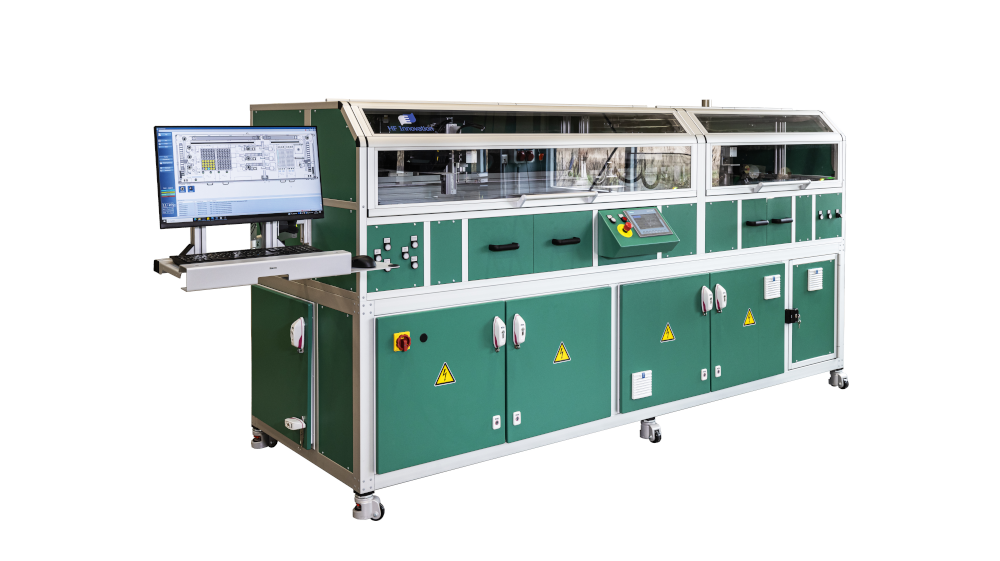
AUTONOMA’s Visual Inspection, Crackle, and Aliquoting Module is designed to be customized for any visual inspection tasks involving oil or coolant samples. By default, this includes turbidity and color measurement, inspection of particles stuck to bottle lids, and the crackle test. The sample is also aliquoted directly from the bottle into test tubes for the standard suite of downstream tests, including ICP, FTIR, and viscometry.
The module offers a compact, fully integrated solution for preparing and analyzing oil samples with a high level of speed, accuracy, precision, and reliability. It is capable of processing a single sample in under 90 seconds, supporting a throughput of approximately 1,000 samples per 24-hour period, making it well suited to high-volume laboratory environments.
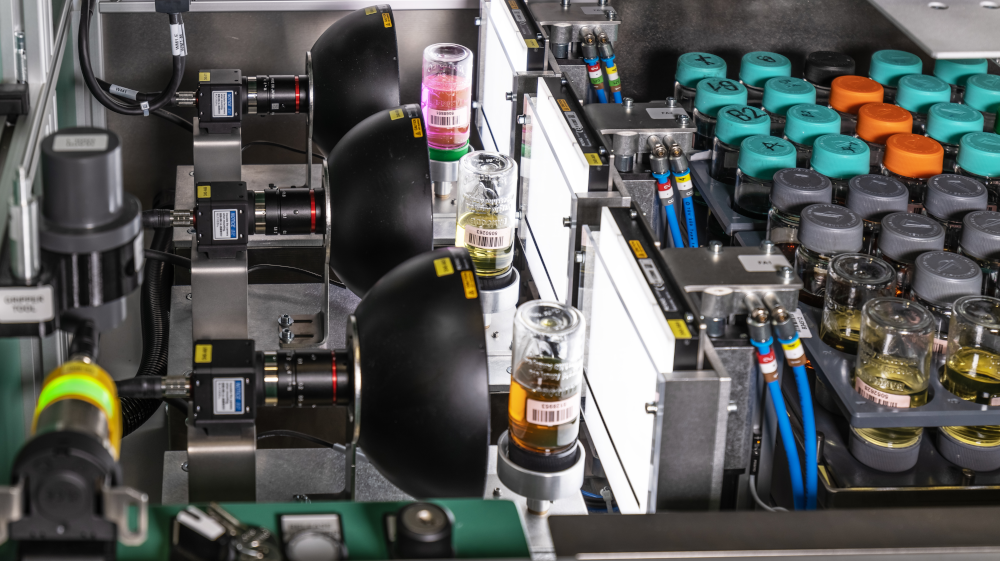
Three separate camera lines dedicated to color and turbidity measurement are positioned next to the double drawers that hold the sample bottles. Three decapping lines connect this section of the machine to the dispensing and crackle analysis area on the right-hand side, enabling a smooth, continuous flow from inspection through to sample preparation.
Features
- AI based visual analysis provides long-term analytical precision between samples and avoids any biases between operators trying to perform the same qualitative tests.
- Customisable for any rack configuration/layout (e.g. 5 x 12 test tube racks, or 96 position Perkin Elmer racks)
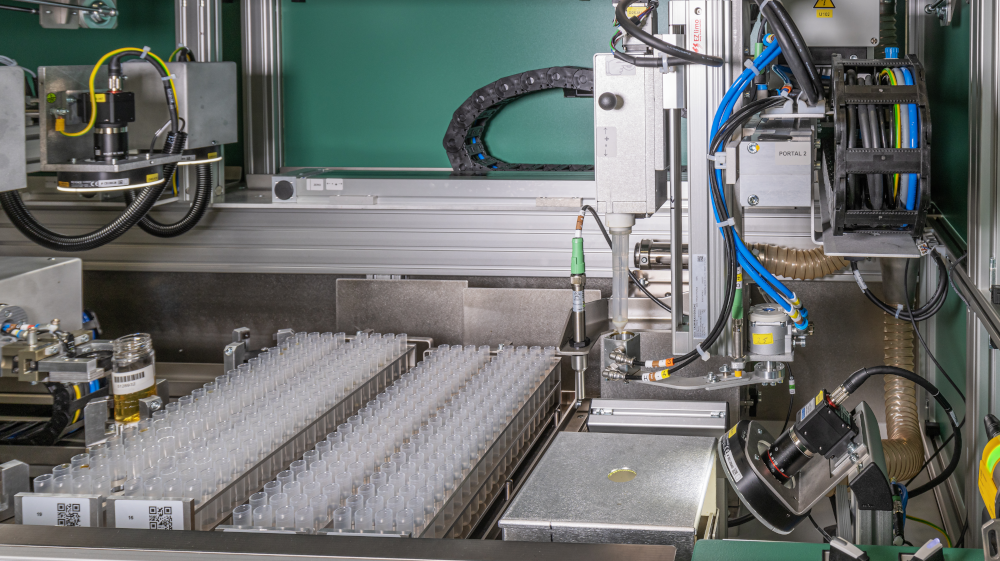
- Drip catcher below pipette avoids cross-contamination while moving over other samples
The modular design supports easy expansion and interfacing with AUTONOMA’s full range of NextGen laboratory automation in the future. It can be customized to incorporate additional analytical methods and sample preparation steps, including but not limited to:
-
- AI based detection and sizing of wear particles that have settled to the bottom of each bottle.
- FTIR
- Viscometry
- PQ (Particle Quantification)
- Sample dilution for ICP/IC
- TAN/TBN
Application
Operators load racks, each containing 20 sample bottles positioned upside down, and register them in the LabDroid software by scanning the rack barcode alongside the drawer barcode. This automatically retrieves the correct sample information directly from the Laboratory Information Management System, eliminating the risk of sample mix-ups before processing even begins. On the right-hand side of the machine, the operator also loads racks containing clean, empty test tubes ready to receive aliquots.
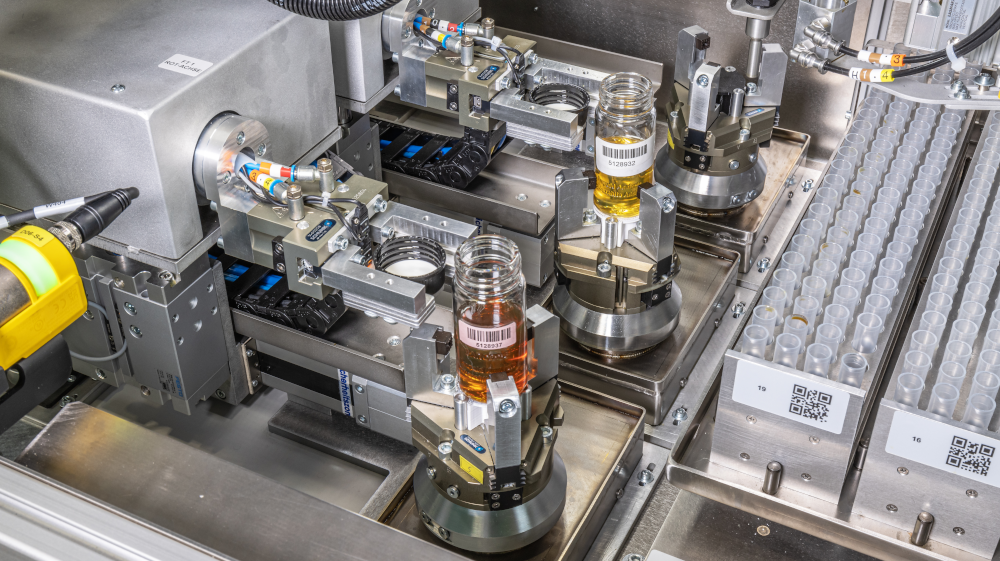
A high-speed XYZ gantry-style robot picks up each bottle and places it on one of three camera lines, where the barcode is rapidly read and color and turbidity analysis is performed. The robot then moves the bottle to one of three decapping lines, which turns the bottle upright and removes the lid. The lid and bottle are then presented to an overhead camera, which captures a high-resolution image and uses AI to detect any wear particles or debris present.
A second XYZ gantry robot pipettes an aliquot of the sample and dispenses it into a corresponding test tube in the rack, while the remaining sample is dispensed onto a hotplate for automated crackle analysis. The reusable pipette is cleaned with solvent and dried using compressed air before the next sample is drawn, ensuring no cross-contamination between samples. The sample bottle is then recapped and returned to its original position in the tray, ready for the operator to remove once the full tray has finished processing.
All photographs, along with color, turbidity, and crackle test results, are transmitted directly to the LIMS in real time, ensuring the chain of custody for sample information is fully maintained throughout the process.
Software
Overall machine control is handled via a standalone PC or a server-based virtual machine running LabDroid software, giving laboratories flexibility in how the system is deployed within their existing infrastructure.
It integrates with other AUTONOMA automation systems, allowing it to operate as part of a broader connected laboratory workflow, and connects easily with popular LIMS platforms such as CCLAS, Starlims, LabWare, and SampleManager, streamlining sample registration and reducing manual data entry.
Results can be exported in CSV, XLS, or TXT formats, with customizable parameter layouts tailored to each laboratory’s specific reporting requirements.
Specifications
| Dimensions | 3100 x 900 x 1600mm [L x W x H] |
| Mass | ~500kg |
| Electrical requirements | 240V, 1 Φ, 50/60 Hz (can be modified upon request) |
| Pneumatic requirements | 6 – 8 bar |
| Daily throughout | ~1000 per 24h |
| Options |
|